


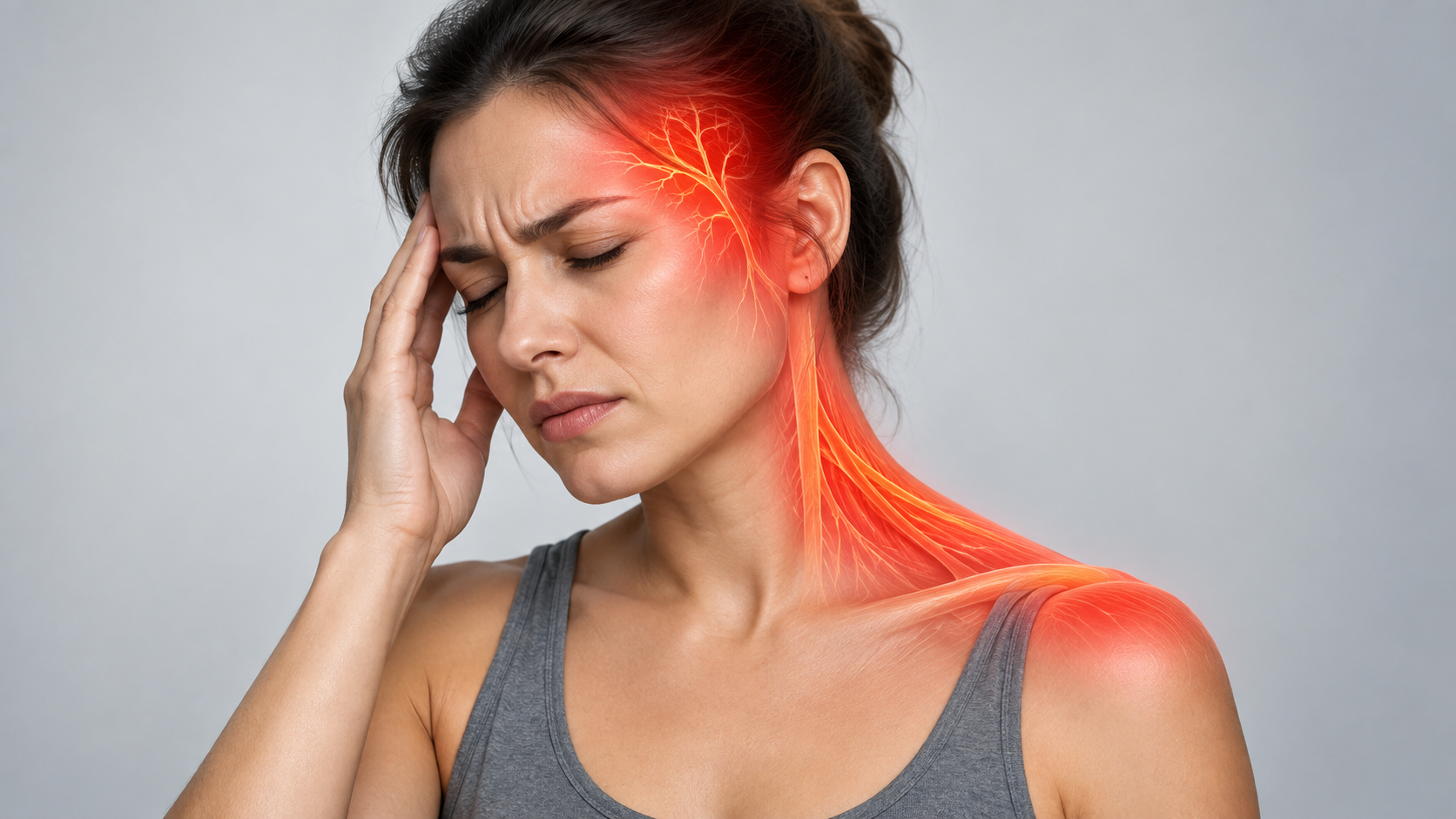
Why Does a Headache Sometimes Affect Only One Side?
If you regularly experience pain on the right or left side of your head, you may wonder why the headache seems to favor one side.
The location of a headache can provide useful information, but location alone usually cannot determine the cause. One-sided headaches can occur for several reasons, and the pain you feel in your head may not always originate there.
In some cases, the headache may be related to a primary headache condition such as migraine. In others, pain may be influenced by structures outside the head, including muscles and joints in the neck or tension around the jaw.
Looking at the overall pattern—including where the pain begins, what it feels like, how long it lasts, associated symptoms, and what seems to trigger it—can provide a more complete picture.
Migraine Can Cause One-Sided Headaches
Migraine is one of the conditions commonly associated with one-sided headache pain.
A migraine may cause throbbing or pulsating discomfort on one side of the head, although migraine pain can also affect both sides or change sides between episodes.
Some people also experience symptoms such as nausea, sensitivity to light or sound, or increased discomfort during physical activity. Others may notice visual or sensory changes before the headache begins.
Because migraine symptoms can vary significantly from person to person, having pain on one side does not necessarily mean that you are experiencing a migraine. Recurrent or disruptive headaches should be appropriately evaluated rather than diagnosed based on location alone.
Neck Tension and Trigger Points Can Refer Pain Into the Head
Sometimes the source of headache pain may actually be located in the neck or upper shoulders.
Muscles such as the upper trapezius, sternocleidomastoid, and small muscles near the base of the skull can become tight or sensitive from prolonged sitting, repetitive activities, stress, or sustained posture.
Within these muscles, some people develop highly sensitive areas commonly referred to as trigger points. A trigger point may produce discomfort locally, but it can also create referred pain—pain that is experienced somewhere other than where the irritated muscle tissue is located.
For example, tension near the base of the skull may be felt toward the back or side of the head. Tightness involving other neck muscles may contribute to discomfort around the temple, forehead, or behind the ear.
This is one reason simply focusing on the location where the headache is felt may not always address the factors contributing to it.
Stretching, massage, movement, and ergonomic changes may help reduce muscle tension. However, when headaches repeatedly return, it may be useful to evaluate whether persistent neck tension or sensitive trigger points are part of the pattern.
Cervicogenic Headaches May Begin in the Neck
Some headaches are associated with structures in the cervical spine and are commonly described as cervicogenic headaches.
The discomfort may begin around the neck or back of the head and travel toward one side. Some people notice that certain neck movements or prolonged positions make the headache worse. Neck stiffness or restricted movement may occur at the same time.
This type of headache can sometimes resemble other headache disorders, which is why professional evaluation is important when symptoms are persistent or recurrent.
Rather than assuming that recurring one-sided pain is coming entirely from the head, examining the neck and surrounding musculoskeletal structures may provide additional information about possible contributing factors.
Jaw Tension and TMJ Problems May Contribute to One-Sided Headaches
The jaw is another potential source of headache symptoms.
The temporomandibular joints, or TMJs, connect the lower jaw to the skull. These joints work together with several muscles involved in chewing, speaking, and opening and closing the mouth.
Frequent teeth clenching or grinding can place additional stress on these muscles. The temporalis muscle, for example, extends across the side of the head and may become tense with repeated jaw clenching.
People experiencing jaw-related problems may notice temple headaches along with jaw soreness, clicking or popping, facial tension, or discomfort when chewing. Symptoms may also be more noticeable after waking if nighttime clenching or grinding is occurring.
Because the jaw, neck, and head function closely together, tension in one area may sometimes influence symptoms in another.
Everyday Habits That May Trigger One-Sided Headaches
Headaches do not always have a single trigger. Several everyday factors may contribute to recurring episodes, including:
- Prolonged computer or smartphone use
- Poor workstation ergonomics
- Stress-related neck and shoulder tension
- Teeth clenching or grinding
- Inconsistent or inadequate sleep
- Skipping meals
- Dehydration
- Spending long periods in the same position
Keeping track of when your headaches occur can sometimes reveal patterns that are difficult to notice otherwise.
For example, headaches that consistently develop after several hours at a computer may suggest a different set of contributing factors than headaches that are present immediately after waking.
What Can You Do When One-Sided Headaches Keep Returning?
When headaches repeatedly return, paying attention to patterns can be helpful.
Consider keeping a simple record of when the headache begins, where the pain is located, how long it lasts, and what you were doing beforehand. You may also want to note sleep, stress, hydration, meals, prolonged screen time, jaw tension, and neck discomfort.
Simple strategies such as taking regular movement breaks, improving workstation ergonomics, maintaining adequate hydration, eating regularly, and getting consistent sleep may help reduce common headache triggers.
If neck or shoulder tension frequently accompanies your headaches, addressing those areas may also be worthwhile rather than focusing only on the location of the headache itself.
How Acupuncture May Support Recurring Headaches
Acupuncture may be a helpful treatment option for people experiencing recurring headaches associated with neck tension, muscle tightness, or sensitive trigger points.
Treatment can be individualized based on the patient's headache pattern and accompanying musculoskeletal findings. For someone whose headaches appear alongside significant neck and shoulder tension, for example, treatment may focus partly on tight muscles and trigger points that could be contributing to referred discomfort.
When Recurring One-Sided Headaches Should Be Evaluated
Most headaches are not medical emergencies, but certain symptoms should not be ignored.
Seek prompt medical attention for a headache that is sudden and extremely severe or is accompanied by symptoms such as weakness, numbness, confusion, difficulty speaking, significant vision changes, loss of consciousness, or fever with severe illness.
Headaches following significant head or neck trauma should also be evaluated.
Even without emergency symptoms, professional assessment may be appropriate if headaches are becoming progressively worse, occurring more frequently, interfering with normal activities, or presenting in a new or substantially different pattern.
Because many different conditions can produce similar headache symptoms, an appropriate evaluation can help determine whether further testing or treatment is necessary.
Ready to Try PrimeLife Acupuncture?
Whether you're experiencing acute or chronic pain, acupuncture can help restore mobility and reduce discomfort safely and effectively.
Book your appointment today with the experts at PrimeLife Acupuncture, the top-rated acupuncture clinic in Bethesda.
Curious to learn more about how acupuncture can help with other pain-related issues? Explore our Pain Management or visit our Blog for further insights improving your well-being naturally.
Disclaimer
This website and its contents are intended for informational purposes only and are not intended to diagnose, treat, cure, or prevent any disease. Whenever possible, patients are advised to seek professional care from a qualified healthcare professional for proper medical evaluation and treatment.