


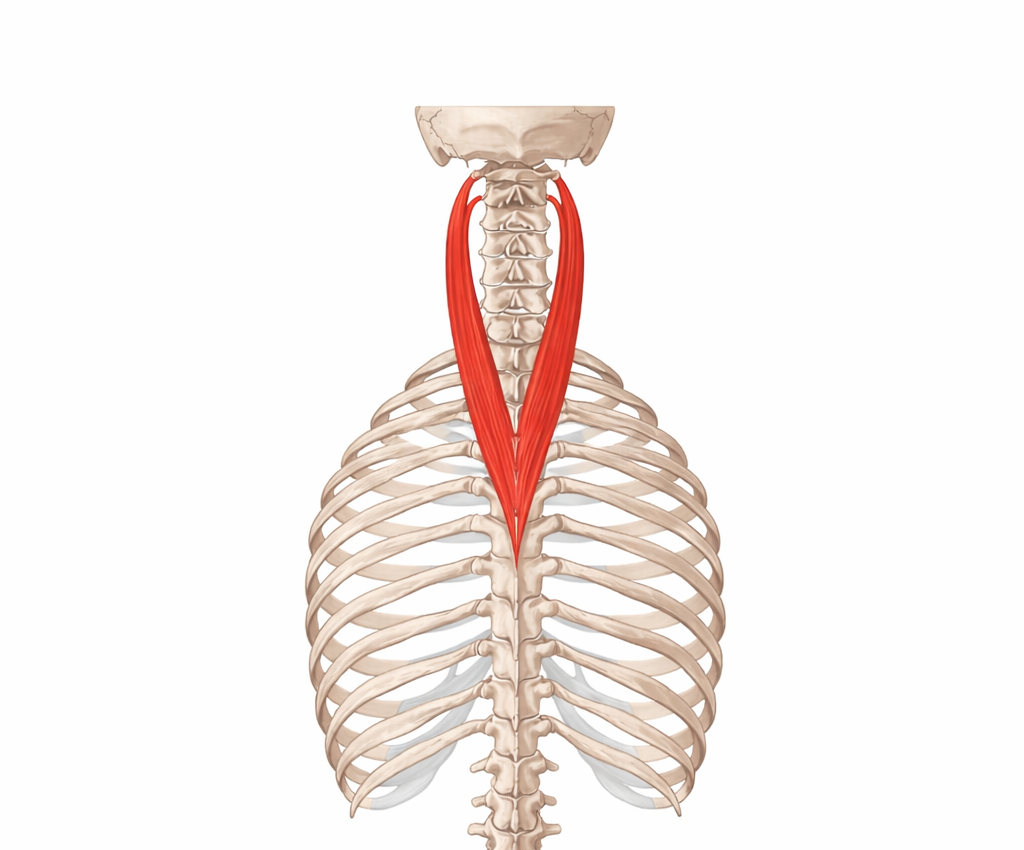
The splenius cervicis is an important muscle in the back of the neck that helps support posture and guide neck movement. Although it is not as commonly discussed as muscles like the upper trapezius or levator scapulae, it can still contribute to neck stiffness, muscular discomfort, and reduced mobility when it becomes tight or overworked. Because this muscle assists with extension, rotation, and side bending of the neck, irritation in the splenius cervicis can make everyday activities—such as turning the head while driving or looking up from a desk—feel uncomfortable and restricted (Henson et al., 2023;Jung et al., 2023).
Where Is the Splenius Cervicis Located?
The splenius cervicis lies in the posterior neck and upper upper-back region. It arises from the spinous processes of T3 to T6 and inserts into the transverse processes of C1 to C3. Together with the splenius capitis, it forms part of the splenius muscle group in the cervical region, helping connect the upper thoracic spine to the cervical spine (Kenhub, n.d.; Henson et al., 2023).
What Does the Splenius Cervicis Do?
The splenius cervicis contributes to several important neck movements. When both sides contract together, it helps extend the neck. When one side contracts, it helps rotate the neck to the same side and supports ipsilateral lateral flexion. These actions make it especially relevant for patients who spend long hours sitting, working at a computer, or holding the neck in one position for extended periods (Jung et al., 2023; Kenhub, n.d.).
Why Does the Splenius Cervicis Become Painful or Tight?
Tension in the splenius cervicis can develop gradually from prolonged forward head posture, repetitive neck movements, poor workstation ergonomics, and sustained static positioning. Since this muscle functions as part of the posterior cervical support system, long periods of desk work or screen use can increase strain in the area. Stress can also contribute by increasing unconscious muscle guarding in the neck and upper back (Henson et al., 2023).
Common Symptoms of Splenius Cervicis Dysfunction
When the splenius cervicis becomes tight or irritated, patients may notice a deep aching sensation in the back of the neck, localized stiffness, and reduced comfort with turning or tilting the head. Some may feel worse after long hours of sitting, computer use, or sleeping in an unsupported position. Because the muscle contributes to extension and ipsilateral rotation, discomfort may be more noticeable when looking up or turning the head toward one side (Jung et al., 2023; Kenhub, n.d.).
How to Relieve Splenius Cervicis Tension or Pain
One effective approach to addressing tension in the splenius cervicis muscle is acupuncture, which can support the release of tight areas in the muscle and help reduce discomfort and stiffness. Acupuncture is often used to encourage circulation, reduce localized muscle tension, and provide supportive relief for patients experiencing discomfort related to this muscle.
Additional strategies that can be beneficial include gentle stretching, massage, applying heat, improving posture, reducing stress, and avoiding prolonged positions that strain the area. By combining these approaches, patients often experience meaningful improvements in muscle comfort and overall mobility over time.
Can Acupuncture Support Recovery?
Acupuncture is commonly used as part of a supportive care plan for patients with muscle-related neck discomfort. In a randomized trial involving patients with chronic neck pain, adding acupuncture to routine care was associated with greater improvement in neck pain and disability than routine care alone after three months, and the benefit was largely maintained through six months(Witt et al., 2006).
These findings support the use of acupuncture as a conservative option for patients dealing with ongoing neck tension and discomfort. When combined with posture improvement, stretching, and activity modification, acupuncture can play a supportive role in improving comfort and function over time (Witt et al., 2006).
Ready to Try PrimeLife Acupuncture?
Whether you’re experiencing acute or chronic pain, acupuncture can help restore mobility and reduce discomfort safely and effectively.
Book your appointment today with the experts at PrimeLife Acupuncture, the top-rated acupuncture clinic in Bethesda.
Curious to learn more about how acupuncture can help with other pain-related issues? Explore our Pain Management page or visit our Blog for further insights improving your well-being naturally.
References
- Henson, B., et al. (2023). Anatomy, back, muscles. In StatPearls. StatPearls Publishing. https://www.ncbi.nlm.nih.gov/books/NBK537074/
- Jung, B., et al. (2023). Anatomy, head and neck, neck movements. InStatPearls. StatPearls Publishing. https://www.ncbi.nlm.nih.gov/books/NBK557555/
- Kenhub. (n.d.). Splenius cervicis muscle.https://www.kenhub.com/en/library/anatomy/splenius-cervicis-muscle
- Witt, C. M., Jena, S., Brinkhaus, B., Liecker, B., Wegscheider, K.,& Willich, S. N. (2006). Acupuncture for patients with chronic neck pain. Pain, 125(1–2), 98–106. https://pubmed.ncbi.nlm.nih.gov/16781068/
Disclaimer
This website and its contents are intended for informational purposes only and are not intended to diagnose, treat, cure, or prevent any disease. Whenever possible, it is advised to seek professional care from a qualified healthcare professional for proper medical treatment.