


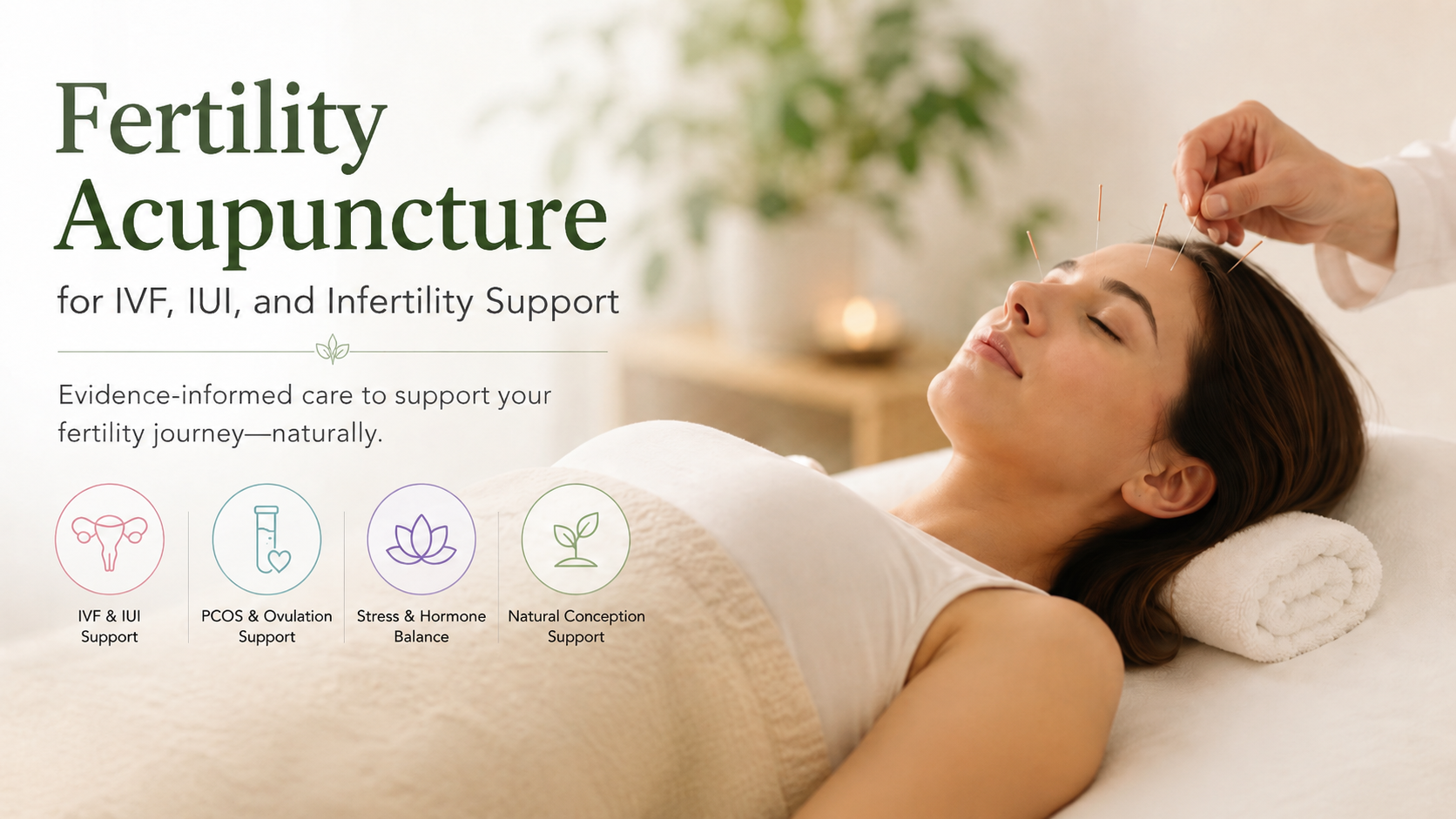
Acupuncture is increasingly studied as a supportive therapy for fertility care, including IVF, PCOS-related infertility, ovulatory function, stress regulation, and reproductive hormone-related pathways. Current research suggests that acupuncture may offer supportive benefits for selected patients, especially when used alongside conventional fertility care. However, outcomes vary, and acupuncture should not be presented as a replacement for reproductive medical evaluation or treatment.
What Is Acupuncture, and Why Is It Used for Fertility Support?
Acupuncture is a traditional East Asian medicine therapy that involves the insertion of very fine, sterile needles into specific points on the body. In modern clinical settings, acupuncture is often discussed not only through traditional theory, but also through its possible effects on the nervous system, endocrine function, blood flow, inflammation, and stress-related physiology.
These systems are relevant to reproductive health. Ovulation, implantation, menstrual cycle regulation, uterine blood flow, and stress response are all influenced by complex communication between the brain, hormones, ovaries, uterus, and immune system.
For this reason, acupuncture has become an area of growing research interest in fertility care. The strongest way to discuss acupuncture in this context is as a supportive therapy that may help certain fertility-related markers or treatment experiences, rather than as a guaranteed method to improve pregnancy or live birth outcomes.
What the Research Says About Acupuncture and Fertility
1. Acupuncture and IVF Support
One of the most studied areas of fertility acupuncture is its use alongside in vitro fertilization, commonly known as IVF. For many patients, IVF can be physically demanding, emotionally stressful, and highly time-sensitive. Because of this, acupuncture is often used as a supportive therapy during the IVF process.
Research suggests that acupuncture may support IVF care in several ways, including helping reduce stress and anxiety, supporting relaxation, and influencing reproductive health markers such as uterine blood flow and endometrial receptivity. These factors are important because implantation depends on a complex interaction between embryo quality, uterine environment, hormonal signaling, and overall reproductive health.
A 2025 updated systematic review and meta-analysis found that acupuncture used alongside IVF was associated with improvements in certain pregnancy-related outcomes, including clinical and ongoing pregnancy rates. The review also reported that acupuncture may help reduce IVF-related stress, anxiety, and treatment-related discomfort (Fu et al.,2025).
The current evidence is best understood to suggest that acupuncture may offer meaningful support during IVF, especially when used as part of a sustained treatment plan and coordinated with a patient’s fertility specialist.
For patients undergoing IVF, the value of acupuncture may come not only from its possible effects on reproductive markers, but also from its role in supporting the nervous system, reducing stress response, and helping the body move through a demanding fertility treatment process with greater balance and comfort.
2. Acupuncture for PCOS-Related Fertility Support
Polycystic ovary syndrome, or PCOS, is one of the most common endocrine conditions associated with irregular ovulation and fertility challenges. PCOS may involve irregular menstrual cycles, elevated androgen levels, ovulatory dysfunction, insulin resistance, and difficulty predicting fertile windows.
Because acupuncture has been studied for its potential effects on ovulation, androgen levels, menstrual cycle regulation, and stress-related physiology, it is often considered as a supportive option for patients with PCOS-related fertility concerns.
A 2025 randomized, single-blind, sham-controlled clinical trial studied women with PCOS-related infertility who were receiving letrozole, a commonly used ovulation-induction medication. In this study, the group that also received acupuncture showed higher ovulation and pregnancy rates during the study period, along with improvements in testosterone levels and endometrial receptivity markers (Ding et al., 2025).
These findings suggest that acupuncture may be a helpful supportive therapy for some patients with PCOS, particularly when used alongside appropriate medical care. It is important to note that acupuncture should not replace medical evaluation or fertility medication when those treatments are indicated. However, for patients with PCOS-related ovulatory dysfunction, acupuncture maybe considered as part of an integrative plan to support cycle regulation, ovulatory function, and reproductive health.
A broader 2025 meta-analysis also found that acupuncture-based interventions were associated with improved ovulation outcomes in patients with PCOS when compared with certain control groups. The authors noted that treatment frequency and total number of sessions may matter, which supports the idea that fertility acupuncture may be most appropriate as a structured course of care rather than a one-time treatment (Wei et al.,2025).
3. Acupuncture, Hormonal Regulation, and the HPO Axis
Another important area of fertility acupuncture research involves the hypothalamic-pituitary-ovarian axis, often called the HPO axis. This is the hormonal communication network between the brain, pituitary gland, and ovaries. It plays a central role in menstrual cycle regulation, ovulation, and reproductive hormone signaling.
Research suggests that acupuncture may influence neuroendocrine pathways involved in reproductive function. Proposed mechanisms include effects on stress regulation, ovarian function, reproductive hormone signaling, and HPO axis modulation (Bai et al., 2024).
This does not mean acupuncture simply “balances hormones” in a broad or guaranteed way. A more accurate way to understand the research is that acupuncture may help support healthy reproductive hormone regulation in selected patients, especially in areas that have been studied in PCOS, irregular cycles, and ovulatory dysfunction.
This is one reason acupuncture is often used as part of an integrative fertility care plan. By supporting the nervous system, stress response, circulation, and reproductive hormone-related pathways, acupuncture may help create a more supportive internal environment for patients trying to conceive or preparing for fertility treatment.
What Acupuncture May Support in Fertility Care
Based on current research, acupuncture may support fertility care in several areas, depending on the patient’s diagnosis, health history, and treatment plan:
- Supporting menstrual cycle regularity and ovulatory function
- Supporting ovulation-related outcomes in selected patients with PCOS
- Supporting uterine blood flow and endometrial receptivity markers studied in fertility research
- Helping reduce stress and anxiety associated with fertility treatment
- Supporting reproductive hormone regulation in areas studied in PCOS and ovulatory dysfunction research
- Serving as an adjunctive therapy during IVF care, while not replacing reproductive medical treatment
- Supporting androgen-related markers in selected PCOS studies
These possible benefits should be understood as supportive rather than guaranteed. Fertility is multifactorial, and acupuncture outcomes may vary from patient to patient.
An Integrative Approach to Fertility Acupuncture
Fertility care is highly individualized. Two patients may both be trying to conceive, but their underlying causes, treatment timelines, hormone profiles, stress levels, menstrual patterns, and medical needs may be very different.
When appropriate, acupuncture care can be coordinated alongside IVF,IUI, ovulation induction, natural conception support, or care for PCOS-related reproductive concerns.
The goal is not to replace medical fertility care, but to provide supportive, evidence-informed care that fits into the patient’s broader reproductive health plan.
For patients undergoing fertility treatment, acupuncture may also provide a structured time to reduce stress, support relaxation, and receive individualized care during what can be an emotionally demanding process.
When to Consider Acupuncture for Fertility Support
A patient may consider acupuncture as part of fertility care if they are:
- Preparing for IVF or IUI
- Trying to conceive naturally
- Managing PCOS-related cycle irregularity or ovulatory dysfunction
- Experiencing stress or anxiety during fertility treatment
- Seeking supportive care for menstrual cycle regulation
- Looking for integrative care alongside conventional reproductive medicine
Patients should always continue appropriate medical care and should consult a reproductive endocrinologist or OB-GYN when fertility evaluation or treatment is needed.
Ready to Try PrimeLife Acupuncture?
At PrimeLife Acupuncture in Bethesda, we provide individualized, evidence-informed acupuncture care designed to support patients throughout their fertility journey.
Book your appointment today with the experts at PrimeLife Acupuncture, the top-rated acupuncture clinic in Bethesda.
Curious to learn more about how acupuncture may support other fertility-related concerns? Explore our Fertility and Perinatal Care page or visit our Blog for further insights.
References
- Bai, T., Deng, X., Bi, J., Ni, L., Li, Z., & Zhuo, X. (2024). The effects of acupuncture on patients with premature ovarian insufficiency and polycystic ovary syndrome: An umbrella review of systematic reviews and meta-analyses. Frontiers in Medicine, 11, 1471243.https://doi.org/10.3389/fmed.2024.1471243
- Ding, M., Zhu, X., Huang, Y., Tan, Z., Zhu, X., Han, S., Shen, J.,& Luo, R. (2025). Acupuncture as an alternative treatment for polycystic ovary syndrome: Effects on ovulation rate, pregnancy rate and endometrial receptivity. Complementary Therapies in Medicine, 93, 103215.https://doi.org/10.1016/j.ctim.2025.103215
- Fu, Q.-W., Zhu, S.-M., Chen, J., Liu, Y.-Q., Liang, C.-H., Song, L.-J., Zhuang, J., Tan, X., Liu, L.-Z., Luo, L., Yin, H.-Y., Yeung, W.-F., Chen, S.-C., Liu, W.-T., Zhang, Q.-X., & Tang, Y. (2025). Acupuncture for women undergoing in vitro fertilization: An updated systematic review and meta-analysis with trial sequential analysis. International Journal of Nursing Studies, 168, 105097. https://doi.org/10.1016/j.ijnurstu.2025.105097
- Wei, J., Shen, Z., Zhao, C.-Y., Xie, C.-L., Bai, H.-F., Yin, J.-H.,& Wang, J. (2025). Dose-response of acupuncture on ovulation rates in polycystic ovary syndrome: A meta-analysis and exploratory dose-response analysis. Frontiers in Endocrinology, 16, 1610338.https://doi.org/10.3389/fendo.2025.1610338
Disclaimer
This website and its contents are intended for informational purposes only and are not intended to diagnose, treat, cure, or prevent any disease. Whenever possible, patients are advised to seek professional care from a qualified healthcare professional for proper medical evaluation and treatment.