


Oops! Something went wrong while submitting the form.

A low back herniated disc can affect the lower back, hips, buttocks, legs, feet, and daily movement. Some people feel only low back stiffness or aching at first, while others experience radiating pain, tingling, numbness, or weakness that travels into the hip, thigh, calf, or foot.
Many people think a herniated disc begins only when the disc itself is damaged. However, in many cases, the problem may develop gradually from repeated stress on the muscles, ligaments, joints, and soft tissues that support the low back. Over time, prolonged sitting, poor lifting habits, weak core support, muscle tension, and repeated strain may place increased pressure on the lumbar spine and contribute to disc-related symptoms.
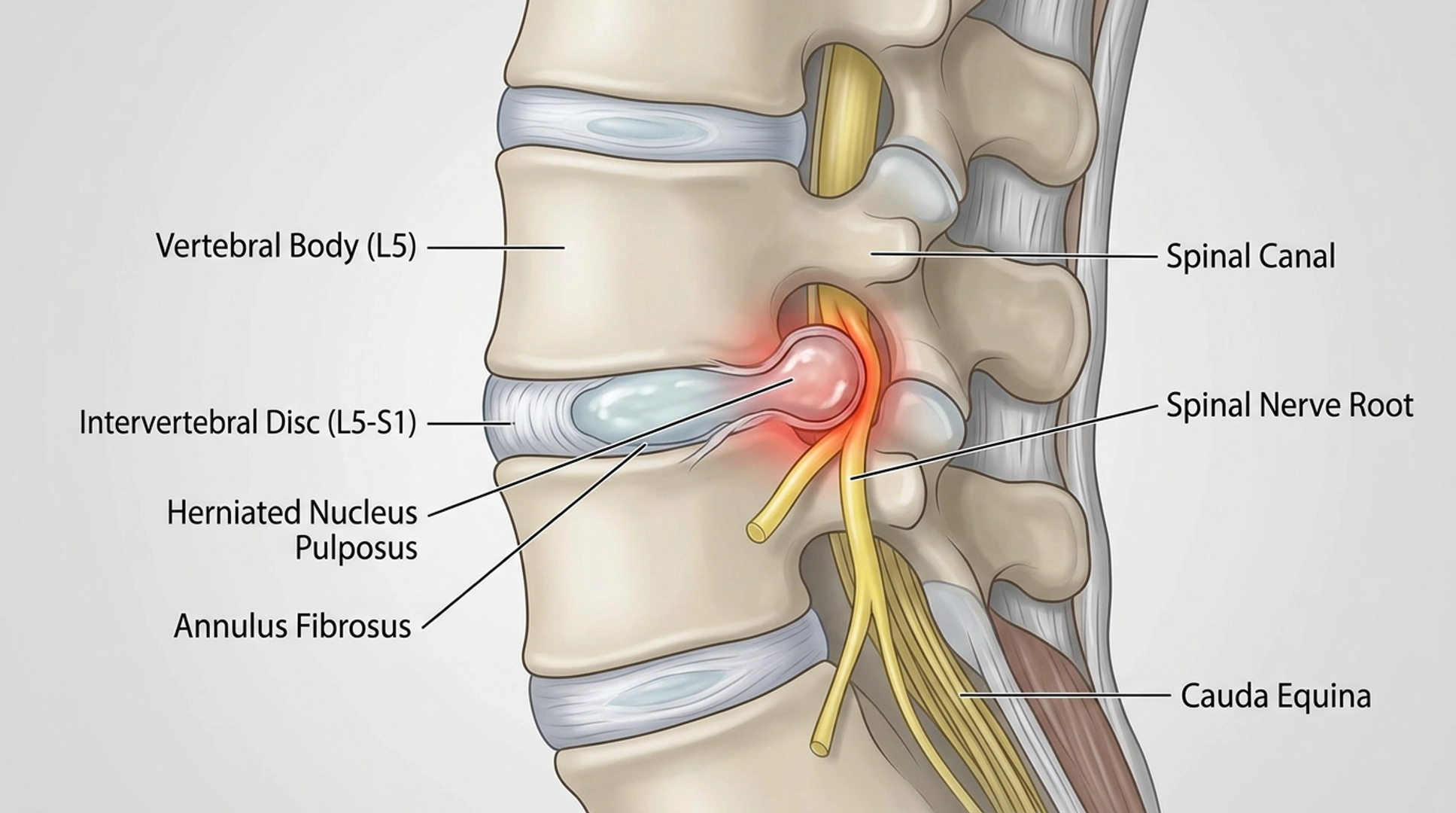
A low back herniated disc refers to irritation, bulging, or displacement of a lumbar disc in the lower spine. The lumbar discs sit between the bones of the lower back and help absorb shock, support movement, and maintain space for the nerves that travel from the spine into the hips, legs, and feet.
When the muscles and ligaments around the lower back are placed under repeated stress, they may become tight, weakened, or irritated. If this pattern continues for a long time, the support around the lumbar spine may decrease, and more pressure may be placed on the discs and surrounding joints.
Low back herniated disc symptoms can vary depending on which tissues or nerves are involved. Some people mainly feel low back pain or stiffness. Others may feel symptoms beyond the back, such as buttock pain, hip pain, leg pain, tingling, numbness, or weakness.
Pain is a warning signal from the body. A low back herniated disc may be telling you that the lower back, surrounding muscles, ligaments, discs, or nerve pathways are under stress and need proper evaluation and care.
Low back herniated disc pain often develops from a combination of posture, muscle tension, repetitive strain, and long-term stress on the lumbar spine. Common contributing factors include:
Prolonged sitting and poor posture
Sitting for long periods can increase pressure on the lower back, especially when the spine is rounded or unsupported. Over time, this may contribute to stiffness, muscle fatigue, and disc-related stress.
Repeated bending, lifting, or twisting
Frequent bending, lifting, twisting, or carrying heavy objects may place repeated stress on the lumbar discs and surrounding tissues. Lifting with a rounded back or twisting while carrying weight can increase irritation in the lower back.
Weak core, hip, or glute support
The low back works closely with the abdominal muscles, hip muscles, glutes, and pelvis. When these areas are weak or not supporting movement well, the lumbar spine may take on extra strain.
Chronic low back muscle tension
When the low back, gluteal, hip, or pelvic muscles remain tight for long periods, they may reduce normal movement and increase pressure around the lumbar spine. Muscle tension in the quadratus lumborum, erector spinae, glutes, piriformis, hip flexors, and deep pelvic muscles may contribute to recurring pain.
Poor movement mechanics
Using the low back instead of the hips and legs during lifting, exercise, or daily movement can place unnecessary stress on the lumbar spine. Over time, this pattern may contribute to repeated irritation.
Reduced hip or pelvic mobility
The lower back does not work alone. If the hips, pelvis, or surrounding soft tissues are stiff, the lumbar spine may compensate during bending, walking, lifting, or exercise.
Poor sleep position or support
Sleeping in a position that strains the lower back, hips, or pelvis may aggravate existing irritation. A mattress or sleep posture that does not support the natural curves of the spine may contribute to morning stiffness and recurring symptoms.
Previous injury or trauma
Falls, car accidents, sports injuries, or sudden twisting movements may irritate the muscles, ligaments, joints, or discs in the lower back. Symptoms may appear immediately or develop gradually after the injury.
Low back herniated disc symptoms can appear in different ways depending on the level of irritation and whether nearby nerves are affected.
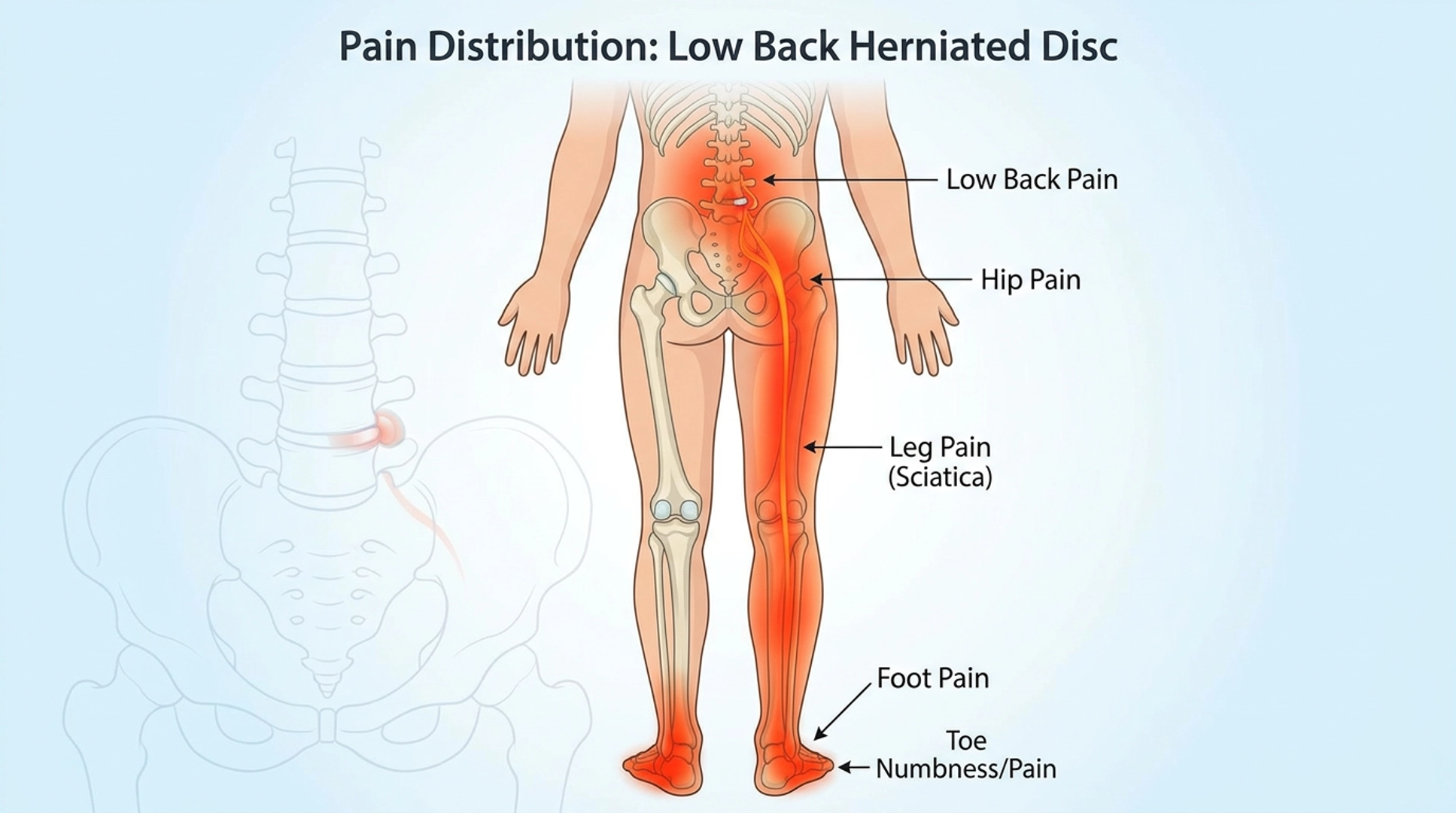
Common symptoms may include:
It is important to distinguish simple low back discomfort from symptoms that may involve nerve irritation. Low back pain alone does not always mean there is a disc problem. However, if low back pain is accompanied by buttock pain, leg pain, tingling, numbness, weakness, or pain traveling below the knee, lumbar disc-related irritation may need to be considered.
Not all low back pain is herniated disc pain. Many people experience low back soreness from muscle tension, posture, overuse, stress, or poor movement mechanics. In these cases, symptoms may stay mostly around the lower back, hips, or pelvis.
However, a low back herniated disc may involve symptoms beyond the back. When the structures around the lumbar spine irritate nearby nerves, symptoms may travel into the buttock, hip, leg, foot, or toes.
Low back pain alone may feel like:
Possible nerve-related symptoms may include:
Low back herniated disc pain may sometimes take longer to improve than neck disc-related pain because the low back and neck are built and loaded differently. This does not mean every low back disc case is severe or that recovery is not possible. Each patient’s condition depends on symptom severity, nerve involvement, posture, daily habits, overall health, and how long the problem has been present.
However, there are several reasons low back herniated disc pain may require careful and consistent management.
1. The low back has a larger treatment area and more connected structures.
Compared with the neck, the low back is a broader region. Low back pain may involve not only the lumbar spine, but also the pelvis, hips, glutes, sacroiliac region, hip flexors, hamstrings, and surrounding soft tissues. Because these areas are closely connected, identifying the main contributing factors in low back disc pain may require evaluating and treating a wider area.
2. The low back carries more daily load than the neck.
The low back supports much of the upper body’s weight and is repeatedly used during major daily movements, such as:
Because of this, the low back may continue to receive repeated load and irritation even during treatment. If posture, lifting habits, sitting time, and movement patterns are not well controlled, recovery may take longer or symptoms may flare up again.
In the early stages of a low back herniated disc, you may feel stiffness, soreness, or aching around the lower back when you move. Some people also feel pain in the lower back, hip, or buttock area.
If the discomfort is accompanied by tingling, numbness, shooting pain, or an electric-like sensation that travels into the buttock or leg, it may be a sign that the disc is irritating a nearby nerve. These symptoms should not be ignored, especially if they continue, worsen, or begin to affect walking, sitting, standing, or daily activities.
When early disc-related symptoms are left unaddressed, the pain may gradually become more intense. In some cases, ongoing nerve irritation may lead to decreased sensation, weakness in the leg or foot, or difficulty with normal daily movement. Severe or worsening neurological symptoms require prompt medical evaluation, especially if there is progressive weakness, loss of sensation, difficulty controlling the bladder or bowel, or numbness in the groin or saddle area.
Disclaimer
This website and its contents are intended for informational purposes only and are not intended to diagnose, treat, cure, or prevent any disease. Whenever possible, patients are advised to seek professional care from a qualified healthcare professional for proper medical evaluation and treatment.
Mon
9:00 AM - 7:00 PM
Tue
9:00 AM - 7:00 PM
Wed
10:00 AM - 7:00 PM
Thu
10:00 AM - 7:00 PM
Fri
9:00 AM - 7:00 PM
Sat
9:00 AM - 2:00 PM
Sun
Closed
© 2024 PrimeLife Acupuncture. All rights reserved.